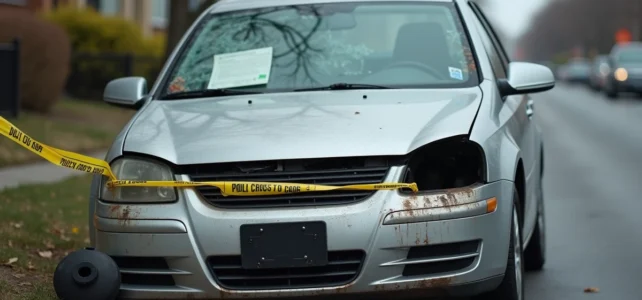
When a road accident results in serious injuries or death, law enforcement may decide to place the involved vehicle under judicial seal. This precautionary measure, governed by the Code of Criminal Procedure, turns the car into evidence. The owner then loses all access to their property, sometimes for several months or even years, until the investigation or proceedings conclude.
Car insurance and judicial seal: obligations that do not stop
A point rarely anticipated by owners concerns their obligations towards their insurer. The placement under seal does not suspend the car insurance contract, and importantly, the deadline for reporting a claim remains five working days from the date of the accident, in accordance with the law.
Even if the vehicle is immediately seized and stored in a location determined by the judicial authority, the insurer awaits this declaration to open the file. An unjustified delay may lead to a reduction in compensation or even a partial refusal of coverage.
The question of a replacement vehicle arises within the first few days. According to Roole, this service is not automatic: it requires having subscribed to a dedicated guarantee, either in the main contract or through an additional auto policy. Many insured individuals discover this gap at the worst moment, when they find themselves without mobility and no backup solution. There are detailed resources on vehicles under seal after an accident on Enchères Voitures to better understand the steps to take in this situation.
Judicial seal: what the precautionary measure concretely implies
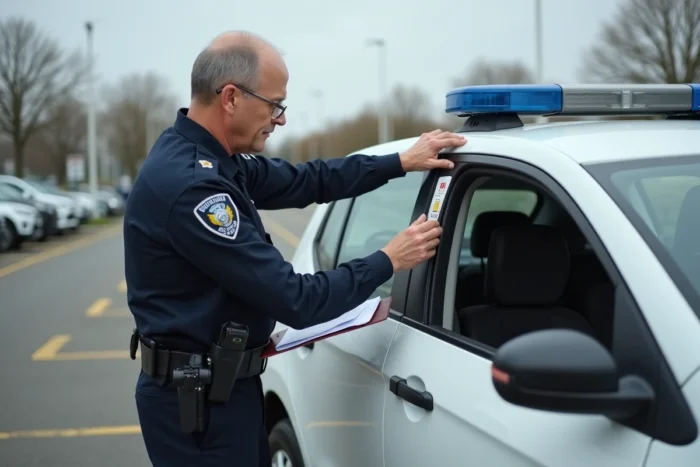
Placing a vehicle under seal means making it an untouchable piece of evidence. The owner cannot move it, repair it, or sell it. Any attempt to manipulate the vehicle constitutes an offense punishable by criminal sanctions.
The vehicle is generally transported to a storage facility designated by the public prosecutor or the investigating judge. A seal report is drawn up, describing the condition of the vehicle at the time of seizure. This document becomes part of the criminal case file.
The duration of immobilization entirely depends on the progress of the judicial procedure. During the preliminary investigation phase, the vehicle may remain under seal for a few weeks. When a judicial inquiry is opened, this timeframe can be significantly extended. The case handled by the Orleans Court of Appeal in March 2026 illustrates this reality: a vehicle remained under seal for nearly four years before a hearing resulted in its return.
Request for return of sealed items: the procedure to know
The return of the vehicle does not occur automatically at the end of the investigation. The owner must request it, and the procedural path depends on the stage at which the criminal case is.
Request to the prosecutor or investigating judge
If the investigation is still ongoing, the request for return is addressed to the public prosecutor, in accordance with Article 41-4 of the Code of Criminal Procedure. When an inquiry is opened, the request should be directed to the investigating judge.
The request must demonstrate that the retention of the vehicle is no longer necessary for the manifestation of the truth. This implies that technical expert assessments have been conducted and that the evidence has been utilized or photographed.
Appeal in case of refusal
A refusal of return can be contested. The appeal process goes through the investigating chamber of the competent court of appeal. The Orleans case mentioned earlier shows that this approach can lead to a favorable outcome, even after a prolonged initial refusal.
Here are the elements to gather to support a request for return:
- A copy of the seal report and the registration certificate proving ownership of the vehicle
- A statement from the insurer confirming the claim report and the status of the compensation file
- A written argument demonstrating that the expert assessments have been conducted and that the retention under seal is no longer of evidential value
- If applicable, evidence of the necessity of the vehicle for professional or family reasons

Compensation and fate of the vehicle after the lifting of seals
The lifting of seals does not resolve the financial question. A vehicle immobilized for months, exposed to the elements in a storage facility, loses value. The damages related to the accident have not been repaired, and additional deterioration may occur.
Compensation from the insurance depends on the type of coverage subscribed and the liability established in the accident. If the vehicle is declared economically irreparable, the insurer offers compensation based on its value before the incident, minus the deductible.
When the criminal procedure identifies a responsible party, a compensation claim can be initiated against them or their insurer, including for damages related to the deprivation of use of the vehicle during the entire duration of the seals.
It may also happen that the owner does not wish to recover a vehicle that is too damaged. In this case, the process of destruction or transfer to a scrap dealer can only begin after the official lifting of the seals. No such steps can be taken as long as the vehicle remains under judicial control.
Consulting a lawyer specialized in road law or criminal law often helps expedite the return and better assess the damages suffered. Each case depends on the circumstances of the accident and the progress of the investigation, making any estimate of time impossible without reviewing the case documents.