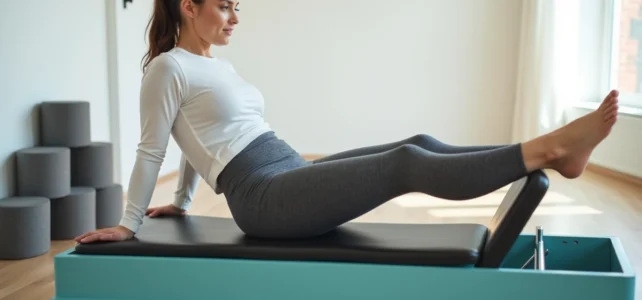
Pilates does not generate a calorie expenditure comparable to running or HIIT. However, recent clinical data shows that this method affects body composition through mechanisms that the mere reading of the calorie counter does not capture. Here, we detail the technical parameters that condition real weight loss through Pilates, far from vague promises.
Body Composition and Pilates: What Clinical Studies Really Measure
Most content contrasts “calories burned” and “toning effect” without ever specifying the protocols behind these claims. A systematic review published in 2022, synthesizing 33 studies published between 2017 and 2021, confirms consistent improvements in fat mass and waist circumference in overweight and obese individuals. Pilates appears as a tool for managing overweight, not just as a gentle maintenance exercise.
A clinical trial conducted on 37 women aged 30 to 50 who were overweight measured a significant decrease in weight, BMI, fat mass, and waist, abdomen, and hip circumferences compared to the control group. The parameters of the protocol are as important as the method itself: 90-minute sessions, three times a week, for at least eight weeks.
We find here Pilates tips on Valbreon that emphasize this regularity as a prerequisite for any visible transformation.
In summary, the question is not “does Pilates help with weight loss,” but “at what dose and for how long.” Without adhering to a sufficient training volume, the results remain marginal.
Caloric Deficit and the Role of Pilates in Appetite Regulation
No physical activity leads to weight loss without a caloric deficit. Pilates does not escape this thermodynamic rule. Its energy expenditure per session remains moderate compared to intense cardiovascular efforts.
The interest of Pilates lies elsewhere. Recent studies point to an effect on regulating eating behavior, a parameter rarely addressed in mainstream fitness articles. Regular Pilates practice promotes better body awareness (interoception), which helps distinguish physiological hunger from compulsive cravings.
This mechanism, associated with the concept of intuitive eating, creates a virtuous circle: the practitioner eats better without following a restrictive diet, which reduces the risk of weight regain in the medium term. The combination of gentle exercise and intuitive eating constitutes a documented approach for individuals who cycle through diets without lasting results.
Pilates Mat or Reformer: Which Format for Slimming Down
The choice of format alters the intensity and thus the impact on weight loss. We often observe confusion between mat Pilates and Reformer Pilates, while the two do not engage the body in the same way.
Mechanical Differences Between the Two Formats
- Mat Pilates relies on body weight. The intensity depends on the practitioner’s technical mastery and their ability to engage the core (powerhouse) without muscular compensation.
- The Reformer adds variable resistance through springs, allowing for modulation of load and targeting specific muscle groups with greater precision.
- MET (Metabolic Equivalent of Task) data indicate a slightly higher expenditure for the Reformer compared to the mat, but the difference remains modest compared to cardio activities.
For someone whose primary goal is weight loss, the Reformer offers an advantage in terms of load progression. The mat remains relevant if the weekly frequency is higher, as it requires no equipment and can be practiced at home.
Frequency, Duration, and Combination with Other Activities for Weight Loss
We recommend not isolating Pilates in a weight loss strategy. The best documented results combine Pilates with complementary cardiovascular activity.
Training Parameters Validated by Research
- Three Pilates sessions per week constitute the minimum threshold observed in studies showing a significant reduction in fat mass.
- Short sessions (less than 45 minutes) produce slower results on body composition, especially in beginners who have not yet acquired sufficient neuromuscular control to maintain high intensity.
- Adding two sessions of brisk walking or light running per week accelerates the caloric deficit without compromising joint recovery, an important point for overweight profiles.
The question of visible results arises systematically. Based on the studied protocols, eight weeks represent the minimum timeframe to observe measurable changes in waist circumference and fat mass percentage. Aesthetic transformations (refined silhouette, flatter belly) generally appear after this threshold, provided regularity is maintained.
Pilates and Deep Muscle Strengthening
Pilates targets stabilizing muscles (transverse, multifidus, pelvic floor) that traditional strength training often neglects. This deep work improves posture, which visually gives a slimming effect even before any real weight loss on the scale.
The scale does not tell the whole story: a gain in lean muscle mass can mask fat loss on the scale. We recommend tracking progress through measurements (waist circumference, hip circumference) rather than weight alone.
Pilates produces measurable results on body composition when the training volume reaches a sufficient threshold and is part of a coherent dietary framework. Three weekly sessions of substantial duration, maintained for at least two months, constitute the technical foundation from which the method delivers its promises of sustainable slimming.