On a rushed morning, three products on the sink instead of eight: this is the shift that beauty routines are taking in 2026. Brands are reformulating, textures are merging, and active ingredients are changing their focus. We are moving from a correction logic to a long-term skin preservation logic, with fewer but more targeted actions. Here are the beauty trends that deserve a concrete place in your daily life.
Longevity ingredients in facial care: NAD+, NMN, and signaling peptides
The composition of facial care is evolving under the direct influence of research on cellular longevity. It is now active ingredients from this scientific field that are redefining consumer formulations.
Professional reports published in 2026, including the CosmoTrends 2026 Report and Mintel analyses on the Asia-Pacific market, identify NAD+, NMN, and signaling peptides (including EGF) as rapidly growing active ingredients in daily care. They can be found in serums, day creams, and even in some makeup bases. Their promise does not focus on immediate smoothing effects but on the long-term preservation of skin health.
The concept that structures this trend is called “skinspan”: it refers to the duration during which the skin remains healthy, by analogy with “healthspan” in medicine. You can explore the new products and brands that incorporate these active ingredients at https://www.planete-beaute.com/, a resource that closely follows the evolution of formulations.
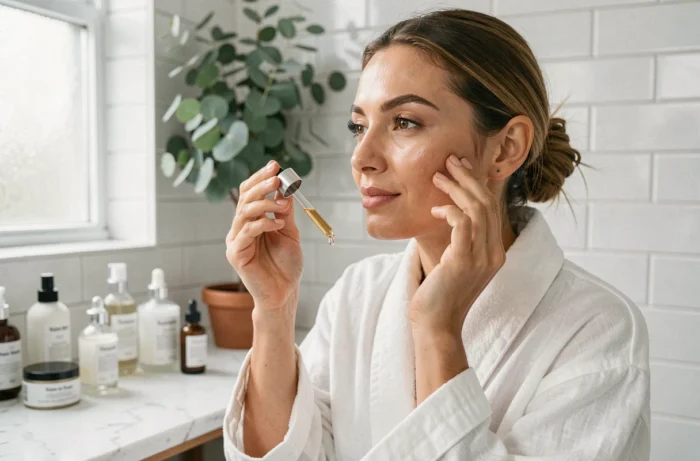
In practice, you incorporate a signaling peptide serum in the morning under your moisturizer. No need to layer: one active of this type is enough in the routine. Feedback varies on this point depending on skin type, but the logic remains the same: focus on a foundational active rather than five layered correctors.
Repairing the skin barrier: the care trend replacing aggressive routines
For years, we piled on exfoliating acids, concentrated retinols, and vitamin C serums, sometimes in the same week. The 2026 market analyses indicate a clear decline in this approach in favor of one priority: repairing and protecting the skin barrier.
In practical terms, this means fewer weekly chemical exfoliations and more ceramides, low molecular weight hyaluronic acid, and moderately dosed niacinamide. Skin irritated by years of hyper-active routines needs to restore its hydrolipidic film before accepting powerful actives.
How to adapt your routine to this approach
- Reduce acid exfoliants to a single application per week, favoring PHAs (polyhydroxy acids), which are less irritating than classic AHAs
- Replace the foaming cleanser in the morning with a simple rinse with lukewarm water or a milk without aggressive surfactants
- Apply a light occlusive treatment (like a squalane-based balm) in the evening to seal in hydration and allow the barrier to rebuild overnight
This “barrier repair” approach does not require buying a complete range. You keep two to three products and observe your skin for three weeks before adjusting.
Hybrid makeup and merged textures: makeup that acts as skincare
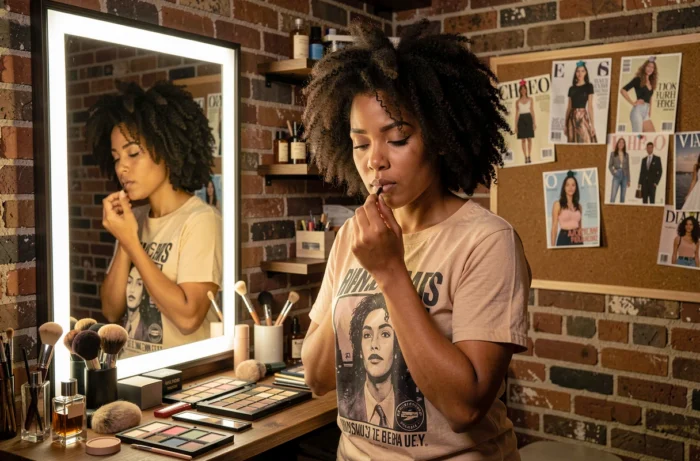
Makeup in 2026 no longer just covers. Formulations incorporate skincare actives directly into the textures, reducing the number of steps between skincare and makeup.
We are seeing the emergence of foundations enriched with peptides, cream blushes infused with niacinamide, and tinted lip balms that contain ceramides. The idea is not just marketing: each layer applied to the face contributes to the skincare routine. Korean brands, in what analysts call “K-Beauty 3.0,” push this fusion even further with cushions that combine sun protection, hydration, and adjustable coverage.
Three criteria for choosing a makeup-skincare product
Not all “hybrid” products are created equal. Before buying, check a few concrete points.
- The INCI list places the skincare active (niacinamide, hyaluronic acid, peptides) in the first third of the formula, not at the end of the list where it would be present in negligible amounts
- The texture does not require a primer underneath: if you have to add a layer for the product to hold, the “fewer steps” benefit disappears
- The product is suitable for daily use without causing pore blockage, which excludes very heavy formulas worn five days a week without double cleansing in the evening
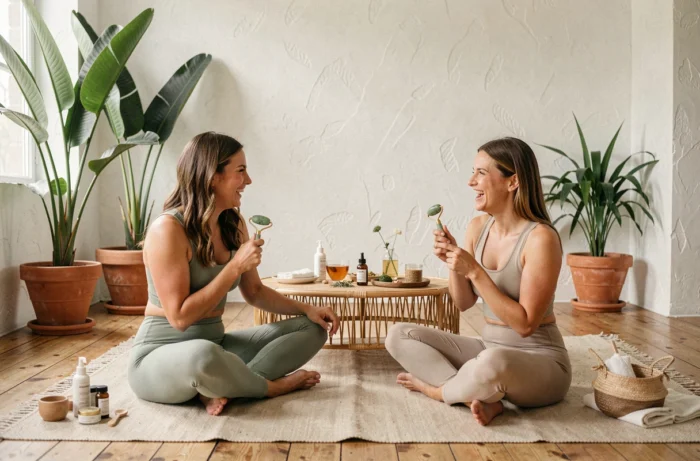
Sensory beauty trend: why texture and fragrance are becoming purchase criteria again
The 2026 reports identify a marked return to sensory experiences in beauty care. After years of clinical formulas and neutral packaging, consumers are seeking textures that provide pleasure at the time of application.
We are talking about melting balms, bi-phase serums to shake, creams that change texture upon contact with the skin. The beauty gesture is becoming a moment of comfort, not just a functional step. This shift also concerns body care: bodycare is gaining sophistication with scented dry oils and body milks with refined textures.
This is not just a marketing issue. A product that is pleasant to apply will be used regularly, whereas an effective but unpleasant serum ends up at the back of the drawer. The regularity of application remains the number one factor in the effectiveness of a routine, regardless of the chosen active.
The beauty trends of 2026 converge towards shorter routines and more demanding formulations. Two to three well-formulated products, applied consistently on a well-functioning skin barrier, yield better results than a dozen stacked treatments without coherence. It is the quality of each gesture that determines the real effectiveness of a routine, with well-thought-out formulations applied consistently.