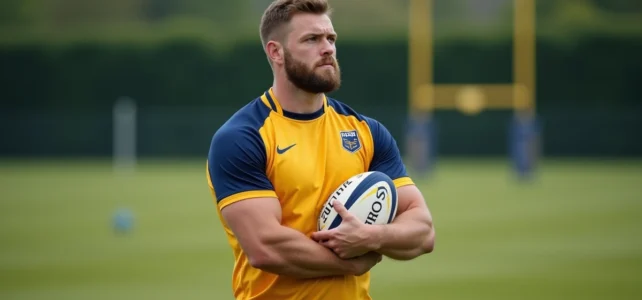
The ASM Clermont transfer market for the 2026-2027 season shows a clear trend: recruitment focused on the Southern Hemisphere, coupled with departures of experienced key players. Which profiles has the Auvergne club targeted, and how do these movements reshape the squad position by position?
ASM Clermont Transfers 2026-2027: Confirmed Signings and Departures at a Glance
| Player | Position | Movement | Source / Destination |
|---|---|---|---|
| Darcy Swain | Lock | Arrival | Wallabies / Super Rugby |
| AJ Lam | Wing | Arrival | Southern Hemisphere |
| Etene Nanai-Seturo | Fullback / Wing | Arrival | Southern Hemisphere |
| Baptiste Germain | Scrum-half | Arrival | Top 14 |
| Justin Bouraux | Forwards | Arrival | Top 14 / Pro D2 |
| Peniami Narisia | Forwards | Arrival | Top 14 / Pro D2 |
| George Moala | Center | Departure | La Rochelle |
| Sébastien Bézy | Scrum-half | Departure | – |
| Irae Simone | Center | Departure | Green Rockets Tokatsu (Japan) |
| Giorgi Beria | Prop | Departure | New club in Top 14 |
This table reveals a deliberate imbalance: more than half of the new signings come from the Southern Hemisphere. The club is not just filling gaps; it is changing the backbone of its squad.
To follow the evolution of these leads over the weeks, transfer rumors at ASM Clermont allow for cross-referencing official announcements and whispers.

Darcy Swain and the Back Line: Clermont’s Southern Hemisphere Bet
The arrival of Darcy Swain, a lock capped 17 times with the Wallabies, is the most recognizable signing of this transfer window. His profile brings muscle and international experience to the Clermont pack, in an area where the club needed physical density.
In the back line, AJ Lam and Etene Nanai-Seturo represent a recruitment focused on speed and versatility. Both players share the ability to cover multiple positions, which offers Christophe Urios broader rotation options without sacrificing the level of play.
Why this geographical shift in recruitment
The choice to recruit heavily from the Southern Hemisphere is not trivial. These profiles come with playing habits different from those in the Top 14: high pace, ability to play upright after contact, quick reading of spaces. Clermont is betting on a more direct and mobile style of play than in previous seasons.
However, the integration of these players into a league as physical as the Top 14 remains a variable. The adaptation period can vary from a few weeks to half a season, especially for players used to different competition formats.
Departures of Moala, Bézy, and Simone: What Clermont is Really Losing
The departure of George Moala to La Rochelle marks the end of a cycle in the center. At 35 years old, the New Zealander leaves the Michelin after being one of the most influential players in the squad in recent seasons. Irae Simone is heading to Japan, to the Green Rockets Tokatsu, which deprives the club of a second international center.
Losing two centers of this caliber in the same transfer window represents a real risk. The center position is where ASM loses the most accumulated experience.
The Scrum-half Position: A Priority Project
Sébastien Bézy, also on his way out, leaves a gap at the scrum-half position. The arrival of Baptiste Germain from the Top 14 addresses this need. The extension of Baptiste Jauneau until 2028 confirms that the club wants to secure this position in the long term, with two complementary options.
This choice to invest in a Germain-Jauneau duo rather than recruit a single experienced and costly profile reflects a desire to build for the long term.
Top 14 and Pro D2 Recruitment: The Squad Depth That Rumors Overlook
The signings of Justin Bouraux and Peniami Narisia have gone relatively unnoticed in media coverage, which has focused on international recruits. These two players, coming from the Top 14 / Pro D2 circuit, fulfill a different but equally strategic role.
- Bouraux provides an additional option in the forwards, an area where squad density directly affects injury management and rotation during a Top 14 season
- Narisia complements the pack with a combat profile, capable of meeting the physical demands of home and away matches
- These arrivals allow the staff not to overload foreign recruits with playing time from the first few matches, facilitating their acclimatization
The ASM transfer market does not rely on a single recruitment axis but on two complementary logics: international profiles to raise the ceiling, and players from the French championship to ensure the floor.
Extensions in Clermont: The Signals the Club Sends to Its Locker Room
The extension of Baptiste Jauneau illustrates another aspect of the transfer market often overlooked. By locking in a player trained at the club on a long contract, ASM sends a clear signal to the young players in its squad: internal progression is valued.
Several prospects from the training center or who have shone with the youth teams of France could see their playing time increase. The departure of experienced key players mechanically frees up minutes, and Christophe Urios’s strategy seems to integrate this rise of young players into the overall sports project.
The prop Giorgi Beria, who has moved to another Top 14 club, also illustrates this sorting logic: the club prefers to let go of a player who has not fully convinced rather than block the emergence of a less experienced profile but with greater development potential.
Thus, the Clermont transfer market for 2026-2027 reads less like a series of isolated moves and more like a methodical reshaping of the squad around three axes: power imported from the Southern Hemisphere, continuity at the scrum-half position, and depth ensured by the French talent pool. Christophe Urios’s ability to integrate these profiles from the first matches of the season will determine whether this gamble translates into results in the Top 14 standings.