The relaxing massage acts on the autonomic nervous system well beyond the simple sensation of relaxation felt on the table. The techniques of effleurage and superficial kneading modify vagal tone, leading to a measurable decrease in circulating cortisol and a concomitant increase in endorphin production. Understanding these mechanisms allows for the selection of the right technique, frequency, and practitioner.
Vagal tone and nervous system regulation through relaxing massage
Slow skin stimulation activates C-tactile fibers, mechanoreceptors present in hairy skin that transmit a signal of pleasure to the insular cortex. This signal lowers sympathetic activity (the “alert” mode) and enhances parasympathetic tone via the vagus nerve. In practice, this translates to a slowing of the heart rate, a decrease in blood pressure, and deeper breathing.
This neurovegetative switch does not occur with just any pressure. An effleurage speed between 3 and 10 cm per second is the appropriate range to recruit C-tactile fibers. A gesture that is too fast or too firm engages other receptors (Pacini, Ruffini) and directs the response towards a tissue effect rather than deep relaxation.
We recommend that individuals seeking pure relaxation ensure that the practitioner adapts their gesture cadence to this goal. Professionals like Les Massages de Tiphaine specifically work on this quality of touch to enhance the parasympathetic response.
Massage and sleep: recent evidence on falling asleep
Most articles on the subject simply state that massage “improves sleep.” An evidence map published in 2026 in BMC Complementary Medicine and Therapies specified the contexts in which this claim is based on solid data.
This synthesis reports a moderate certainty evidence that acupressure reduces sleep latency in patients with chronic kidney disease. It also identifies a comparable level of evidence for improving sleep quality in cancer patients through acupressure and auriculotherapy protocols.
For a public without chronic pathology, the data remain more limited in terms of evidence level. Classical relaxing massage (effleurage, light kneading) promotes falling asleep through its action on vagal tone described above, but large-scale randomized studies are still lacking on healthy subjects.
Frequency and duration of sessions for sleep
The protocols studied in recent literature use biweekly sessions over several weeks. A one-time massage provides an immediate effect on relaxation, but regularity conditions the lasting improvement of sleep.
We observe that a weekly session is a good compromise for individuals suffering from mild falling asleep issues. The goal is to “re-educate” the sympathetic-parasympathetic switch at the end of the day.
Hot stones and local heat: effects on circulation and muscle tension
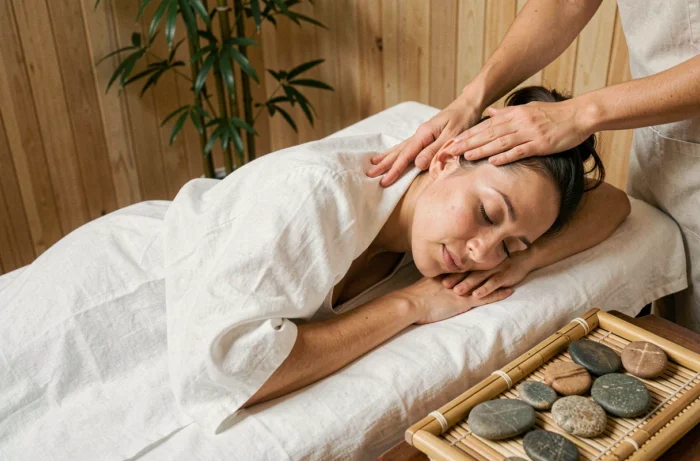
The hot stone massage combines two stimuli: mechanical pressure and radiant heat. The heat causes local vasodilation, improving blood circulation in subcutaneous tissues and facilitating the release of contracted muscle fibers.
This is not a spa gimmick. Heat applied between 40 and 50 °C to a hypertonic muscle lowers its sensitivity threshold to stretching, allowing the practitioner to work on tensions with less pressure and therefore less pain for the recipient. Basalt stones retain heat for a long time, providing extended working time without constant reheating.
- Basalt is the most common rock for hot stones, thanks to its density and high thermal retention capacity.
- Cold stones (marble) can be alternated with hot ones to create a vascular contrast effect, useful in cases of heavy legs or mild venous stasis.
- Complementary accessories (jade rollers, silicone cups) add superficial drainage but do not replace the depth of manual work with stones.
Specific contraindications to heat
Individuals on anticoagulants, with sensitivity disorders (diabetic neuropathy), or active skin inflammations should avoid direct local heat. A prior assessment by the practitioner is necessary before any hot stone session.
Relaxing massage and mental health: beyond temporary stress
The evidence map from 2026 mentioned above also reports a moderate level of evidence showing that massage decreases depressive symptoms in individuals living with dementia. This result goes far beyond the usual “anti-stress” framework.
Structured touch, in a secure setting, activates neurobiological circuits related to attachment and emotional regulation. For socially isolated individuals or those experiencing cognitive decline, relaxing massage becomes a genuine care practice, not a luxury.
- The reduction of anxiety occurs through the decrease of cortisol, but also through the increase of oxytocin, a hormone linked to social bonding and trust.
- The setting of the session (soft lighting, absence of aggressive sound stimulation, slow rhythm) contributes as much as the technical gesture to the effect on mood.
- The effects on chronic fatigue are documented with moderate certainty in patients with chronic kidney disease, through regular acupressure protocols.
Integrating regular relaxing massage sessions into a multidisciplinary care pathway (psychotherapy, adapted physical activity) enhances the benefits for mental health. Massage does not replace medical follow-up, but it serves as a complementary lever whose evidence strengthens year after year.
The next time you book a relaxation session, keep in mind that the choice of technique and regularity matter as much as the gesture itself. A trained practitioner will know how to adapt pressure, cadence, and accessories to your current physiological state, transforming an hour on the table into a true regulatory tool for the body and mind.