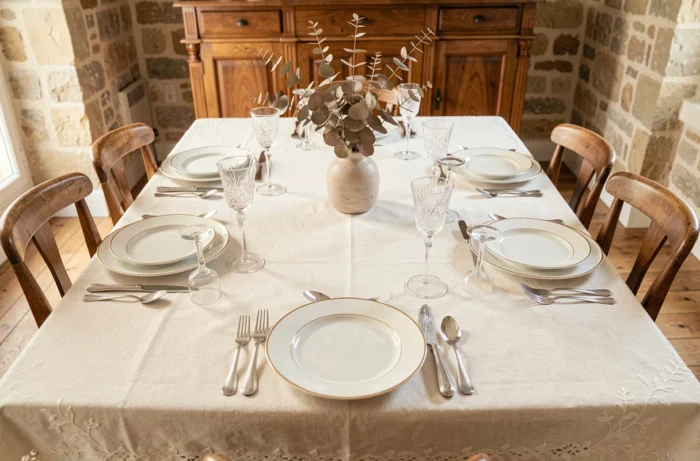
A dinner planned for Saturday, six place settings to set, and this persistent feeling that the table lacks depth despite a decent tablecloth and white plates stacked for years. The problem doesn’t lie with the menu, but with what is placed around it. Trends in elegant tableware have shifted: we are no longer seeking uniform perfection; we are looking for texture, balanced color, and a controlled mix.
Understanding these changes allows us to transform a mundane place setting into a table that captures attention even before the first bite.
Stoneware and artisanal ceramics: the material that changes everything on a table
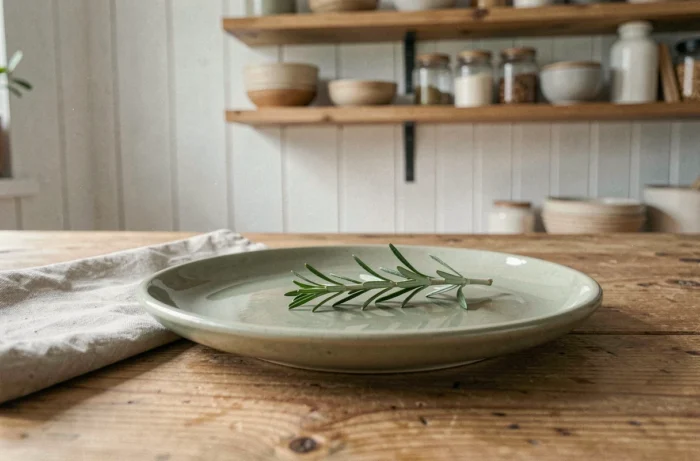
When you replace a flat industrial porcelain plate with a piece of glazed stoneware, the difference is visible and tangible. The slightly irregular surface, the variations in shade from one plate to another, the thickness of the rim: all of this creates a visual relief that smooth tableware does not produce.
Stoneware has established itself as the leading material in table arts today. The enthusiasm for pottery workshops and ceramic cafes directly contributes to this: more and more individuals are bringing home unique, handcrafted pieces that blend well with commercial tableware. One artisanal piece per setting is enough to break the uniformity, such as a soup bowl or a dessert dish.
To choose quality stoneware, check the firing (high temperature for durability), food-safe glaze, and dishwasher compatibility. Feedback on this point varies among workshops, so it’s best to ask the ceramist before investing in a complete set. Additionally, the tableware offered by La Table de Jeanne allows you to explore pieces that follow this textured trend without going through custom manufacturing.
Vintage tableware and French faience: elegance through history
Digoin plates, floral faience dishes found at flea markets, inherited soup tureens: everything that has been lying in attics is returning to tables. This neo-vintage movement is not just about gratuitous nostalgia. It responds to a logic of slow decor and made in France that appeals beyond the circle of collectors.
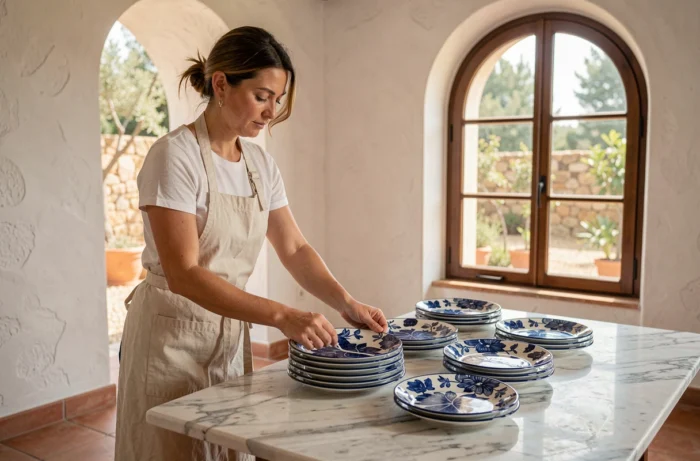
Retro faience brings a color palette that is unavailable in contemporary tableware: cobalt blues, almond greens, hand-painted floral patterns. They are integrated in touches, mixed with current solid pieces. The contrast between a modern presentation plate and a vintage dessert plate creates a lively setting, far from a catalog table.
Combining old and modern without a taste faux pas
The operational rule is simple: maintain a common thread through color. If the old faience leans towards blue, choose tinted glasses in the same family or a tablecloth that picks up this muted tone. The rest (cutlery, napkins) remains neutral.
Another practical point: old faience rarely withstands the microwave and sometimes does not fare well in the dishwasher. It is reserved for presentation pieces or serving dishes, not for everyday breakfast bowls.
Colors and textures on the table: palettes that work in decoration
Pastel shades (powder pink, sage green, sky blue) dominate the new collections of table arts. They can be found on plates, blown glasses, and candlesticks. Alongside this softness, bolder colors (terracotta, plum, midnight blue) appear for autumn and Christmas tables.
The common pitfall is to multiply colors without hierarchy. On a successful table, we work with two main shades and a third as an accent. For example:
- Cream stoneware plates, pink linen napkins, amber-tinted glasses for a summer dinner
- White tablecloth, midnight blue tableware, golden touches on cutlery or napkin rings for a Christmas ambiance
- Raw wood placemats, olive green ceramic bowls, clear glassware for a nature lunch
Textures and organic shapes: beyond color
Perfect round shapes are giving way to irregular contours, wavy edges, and slightly asymmetrical plates. These organic shapes are directly inspired by artisanal ceramic work and bring visual movement to the table.
In terms of textures, we layer materials: crumpled linen for the tablecloth, wood for the trivets, blown glass for the carafes. It is the layering of textures that creates depth, not the accumulation of decorative objects.
Tinted glasses and colored glassware: the detail that transforms the atmosphere
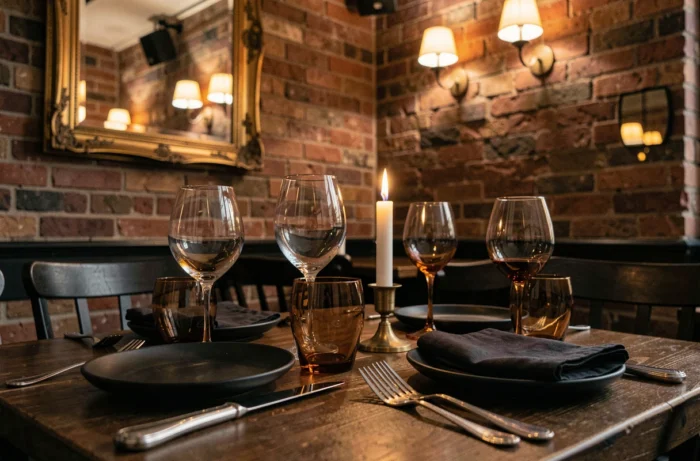
A tinted glass in pink, amber, or olive green radically changes the perception of a set table. It is the cheapest and most visible decor lever. Colored glasses can be found at all price points, and they work equally well on a festive table or for an ordinary aperitif.
Two to three colored glasses per guest are enough to create an effect: a tinted water glass and a clear wine glass, or vice versa. The intentional mix (each guest has a different color) works very well on casual tables.
- Amber shades warm up autumn tables and pair well with wood
- Pink and sage green are suitable for spring tables and outdoor settings
- Cobalt blue or emerald green are perfect for Christmas dinners or formal occasions
Avoid mixing tinted glasses and printed pattern glasses on the same table: the result quickly becomes cluttered. The color of the glass serves as decoration; there’s no need to add more.
Renewing an elegant table does not require a complete replacement of the service. A set of tinted glasses, one or two pieces of stoneware, a vintage plate found at a flea market: these targeted additions transform a setting without blowing the budget. The current trend rewards thoughtful mixing rather than matching sets, leaving room to gradually compose a table that tells a story.