
Driving with under-inflated tires on a Toyota Yaris hybrid means losing road grip and increasing fuel consumption without even realizing it. The tire pressure for the Yaris hybrid depends on the fitted size, the load carried, and the vehicle’s trim level. It is not a single value applicable to the entire range.
Tire Pressure Yaris Hybrid: Why Size Changes Everything
Have you ever compared the inflation label on your door with that of another Yaris owner? The numbers don’t always match, and that’s normal.
On the current generation (XP210), several tire sizes coexist depending on the trim. Base models often run on 175/65 R15 or 185/60 R15, while some recent hybrid trims are associated with sizes of 195/60 R16 or 205/45 R17. This size difference directly alters the recommended pressure.
A wider tire (205 mm) and a lower profile (45) handle loads differently than a narrower and taller tire. Inflating a 205/45 R17 to the same pressure as a 175/65 R15 ignores the tire’s geometry. The shorter sidewall supports less deformation, the contact patch changes, and the weight distribution between the front (internal combustion engine plus electric block) and rear varies.
To find the exact value suited to your size, consult this complete guide on Toyota Yaris hybrid tire pressure that details the values by size and load.
Recommended Pressure Values by Tire Size
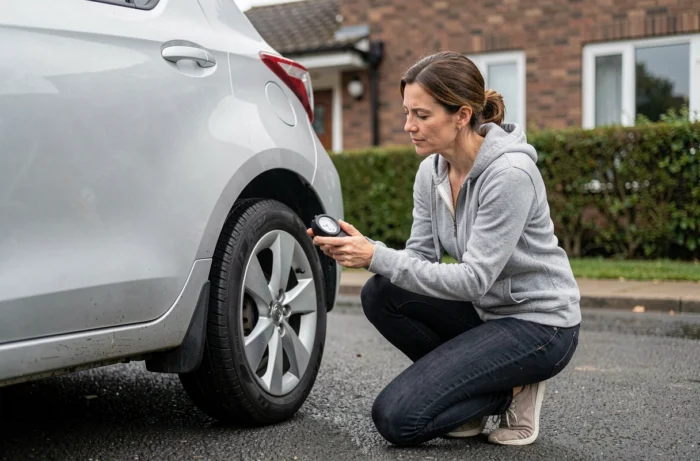
Here are the indicative pressures recorded for the main sizes of the Yaris hybrid. These values correspond to cold tires (vehicle stationary for at least two hours or less than three kilometers driven).
| Size | Front (bar) | Rear (bar) | Front loaded (bar) | Rear loaded (bar) |
|---|---|---|---|---|
| 175/65 R15 | 2.3 | 2.2 | 2.5 | 2.4 |
| 185/60 R15 | 2.2 | 2.2 | 2.3 | 2.3 |
| 195/50 R16 | 2.3 | 2.2 | 2.5 | 2.4 |
The rear pressure significantly increases when loaded, sometimes by 0.2 bar. This makes sense: the trunk of the Yaris is small, and a few extra passengers add weight to the rear axle.
Toyota France recommends always referring to the label affixed to the driver’s door pillar or the vehicle manual. The values in the table above are indicative. If your trim uses 205/45 R17, the pressure differs, and only the manufacturer’s label is authoritative.
TPMS System of the Yaris Hybrid: Understanding the Pressure Light
The small orange icon shaped like a deflated tire on the dashboard is the TPMS (Tire Pressure Monitoring System). On the Yaris hybrid XP210, each wheel is equipped with a pressure sensor that transmits its data in real-time.
The system activates when a significant deviation is detected from the stored reference value. The issue is that this reference value must be recalibrated after every pressure adjustment or tire change. Without this reset, the light may stay on even when your tires are properly inflated.
The reset procedure typically goes through the multimedia system menu or a dedicated button under the steering wheel. After inflating all four tires to the correct pressure, you start the procedure and drive a few kilometers for the system to register the new values.
A point not to be overlooked: an active TPMS light can lead to an observation during the technical inspection. The system is part of the safety equipment that is checked. It’s better to reset it properly than to stick a piece of tape on the dashboard.
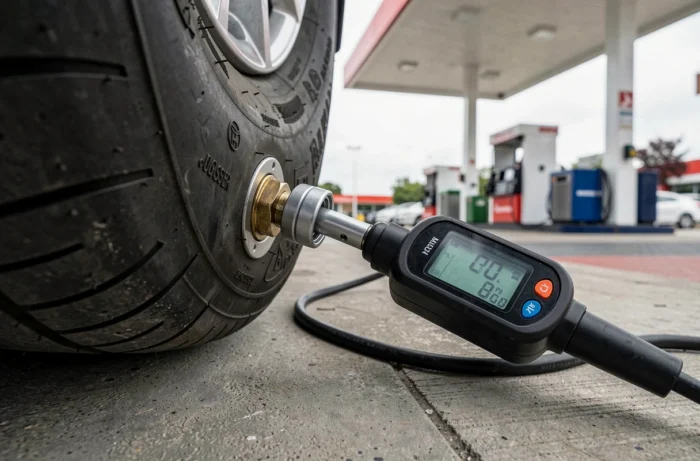
Tire Pressure and Fuel Consumption on a Hybrid
On a conventional thermal vehicle, a slight under-inflation of a few tenths of a bar increases rolling resistance and thus consumption. On a hybrid like the Yaris, the effect is amplified by the energy recovery logic.
The electric motor recovers energy during braking and deceleration. If the tires offer more rolling resistance due to insufficient inflation, the internal combustion engine must compensate more. The hybrid system loses efficiency because it spends more energy to maintain speed, leaving less margin for recovery.
Checking the pressure every month protects both consumption and tire longevity. Regular under-inflation accelerates sidewall wear. Over-inflation wears the center of the tread. In both cases, you will replace your tires sooner than expected.
Toyota Approved Tires: An Often Ignored Criterion
Toyota France emphasizes a point that most pressure guides overlook: the recommended pressure assumes tires approved for the vehicle. A tire from another brand or model, even in the correct size, may have a different load index or speed rating.
Before inflating, check these elements on the sidewall of your tires:
- The complete size (width, profile, diameter), for example, 185/60 R15
- The load index (the number after the diameter, like 84), which indicates the maximum weight supported by each tire
- The speed rating (the final letter, like H or T), which corresponds to the maximum speed allowed for that tire
If any of these parameters differ from the original fitment, the pressure indicated on the door label may no longer be suitable. In this case, refer to the tire manufacturer’s recommendations for the actual load of your vehicle.
When and How to Check the Pressure on the Yaris Hybrid
The check should be done on cold tires. After a trip, heat increases the internal pressure and skews the measurement. Wait at least two hours or limit yourself to three kilometers of travel before measuring.
- Use a reliable gauge or a recently calibrated inflation station at a gas station
- Check all four tires plus the spare wheel if your Yaris is equipped with one
- Reset the TPMS after each adjustment to avoid a phantom light
- Check the pressure at least once a month and before each long trip
A portable compressor with an integrated gauge remains the most convenient option for regular checks at home. Compact models powered by the vehicle’s 12V socket are more than sufficient to adjust a few tenths of a bar.
The tire pressure on a Yaris hybrid is not a trivial maintenance detail. It affects road handling, the actual consumption of the hybrid system, and compliance with the technical inspection. Make it a habit to check before the TPMS light forces you to do so.